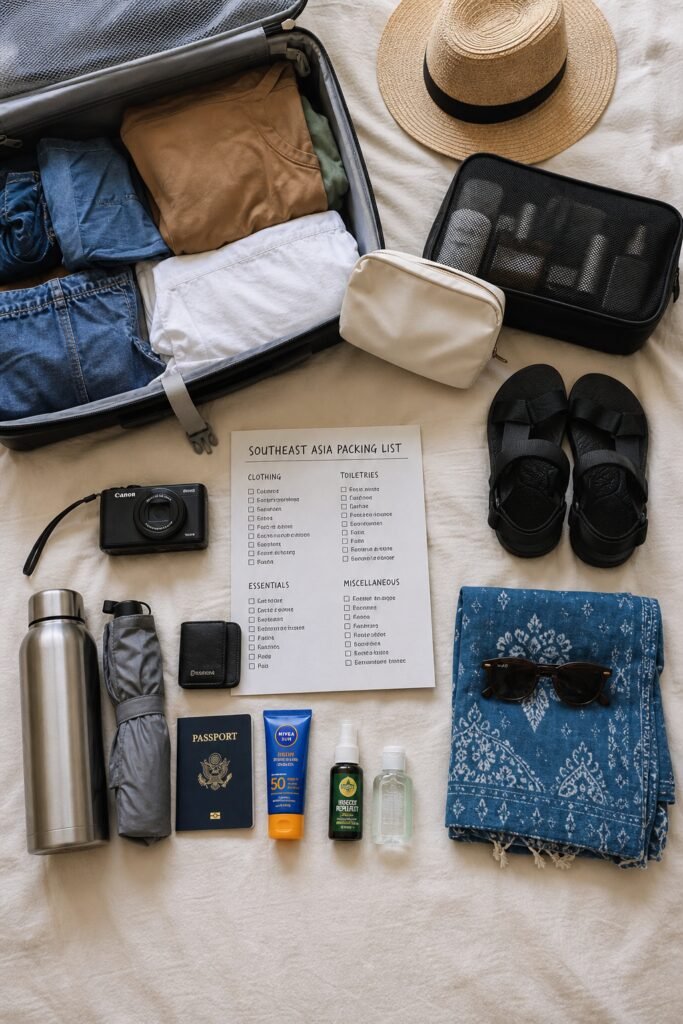
Hook: You don’t need a mountain of gear to travel Southeast Asia. You can pack light, stay comfy, and keep moving. This guide shows you how to map your itinerary, pick the right luggage, choose climate-friendly clothes, and add health, safety, and tech must-haves. We’ll keep things simple and practical so you can build your own Southeast Asia packing list fast. For extra ideas, check our route guide: Top 7 Southeast Asia Backpacking Routes for 2026.
Along the way, we’ll pull in real, tested tips from Aussie travelers and trusted sources so you can see what really matters in a Southeast Asia packing list. You’ll learn how to think in climate zones, not just places. You’ll learn to travel lean but ready for rain, heat, temples, and night buses. And you’ll finish with a checklist you can pull from your phone or print. Let’s plan your perfect Southeast Asia packing list, one smart step at a time.
Ready? We’ll start with Step 1. Map your itinerary and climate zones so you know what to expect. That smart move cuts a lot of guesswork from your Southeast Asia packing list and helps you pack only what you need.
Step 1: Map Your Itinerary & Climate Zones
Think of your Southeast Asia packing list as a map. You’ll visit cities like Bangkok, Hanoi, Kuala Lumpur, and Siem Reap. Each spot has its own vibe and weather, but the region is often hot and humid. The trick is to plan for a common core of gear, with a few weather tweaks per place. Start by writing down all the stops, then group them by climate: hot and humid, warm with rain, and occasional cool evenings in air‑con spaces. This helps you decide what to wear every day and what to pack for day trips. Your clothes will likely live in the hot and humid bucket. Add a lightweight layer for cool buses or evenings in the highlands.
Next, map the river of rain. SE Asia monsoons swing across the region from May to October in many areas, with showers that can hit hard and fade fast. The rest of the year is still warm, with humidity high enough to make even light fabrics feel damp. That weather pattern means you’ll want quick-dry fabrics and clothes you can layer. Your Southeast Asia packing list should center on breathable fabrics, moisture wicks, and a quick-dry attitude, so consider picking up travel clothing and accessories that suit these needs. A compact umbrella or poncho is a simple hedge against sudden downpours, especially on crowded streets and temple grounds. And yes, you’ll do more laundry than you expect, so plan for quick-dry items that survive several cycles between washes.
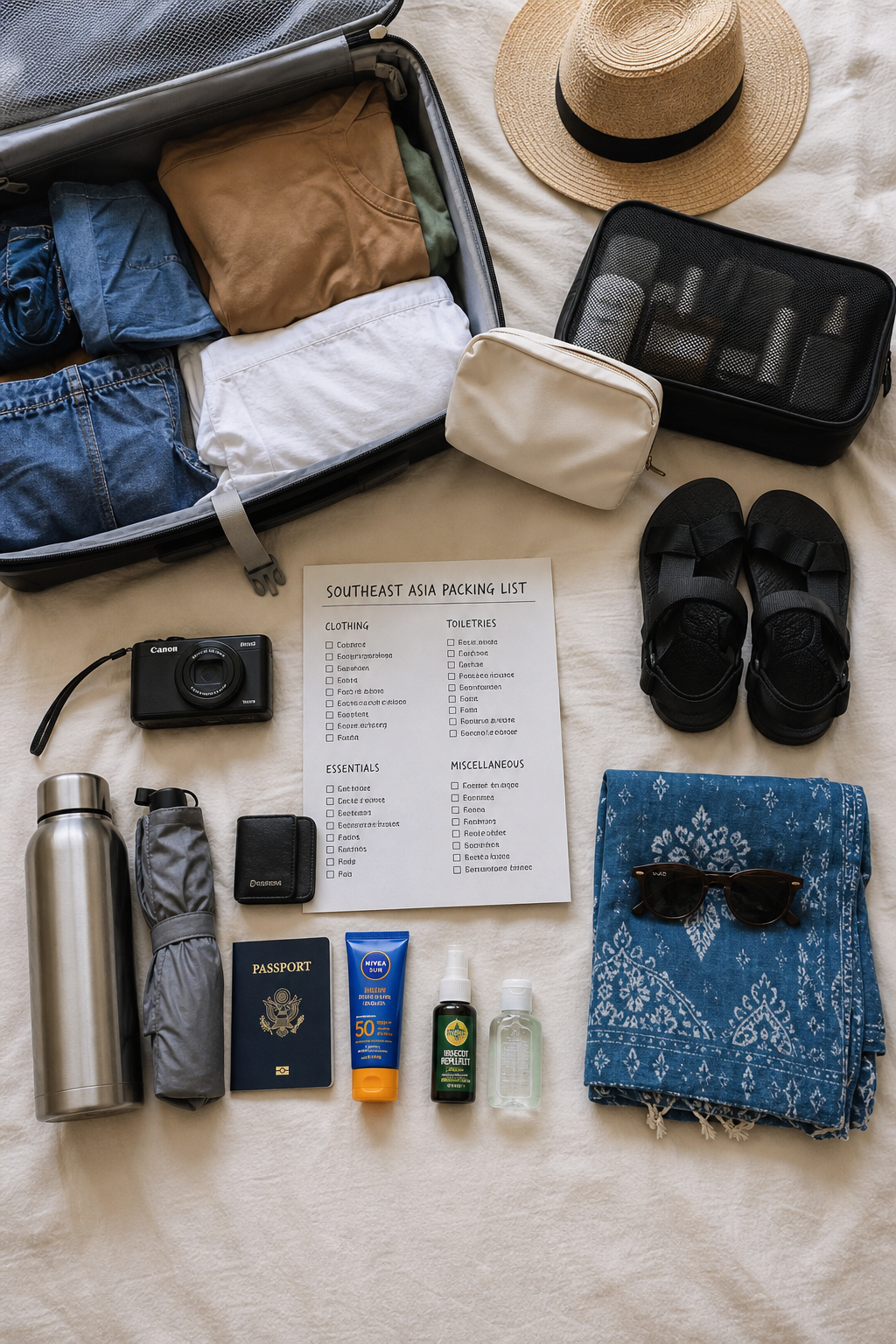
Channel the data you gathered. Climate zones, humidity levels, and rain patterns all shape your Southeast Asia packing list. If your route includes Sapa’s cool evenings or the highlands, you’ll add a thin fleece or a light hoody. If you’re island‑hopping in hot coastal towns, you’ll swap in more moisture-wicking tees and shorts. The right plan means you’re not lugging a sweater you won’t wear. It means your Southeast Asia packing list stays lean, but your comfort stays high. And here’s a quick stat from our field look at packing data: 44% of items had climate notes, and hot and humid notes appeared in a third of those notes, showing climate tuning is common in Southeast Asia packing advice.
Pro Tip: draw a simple two-column map. Left column = climate needs. Right column = your clothes and gear that meet those needs. Start with a core Southeast Asia packing list base, then tailor for trips that lean hot and humid or toward cooler evenings in the highlands. And if you want a route idea for climate-based packing, our Southeast Asia packing list approach works with most itineraries. For a deeper dive into routes, : Top 7 Southeast Asia Backpacking Routes for 2026.
And remember the climate fact: Southeast Asia is mostly hot and humid, so you’ll lean on light layers, fast-dry fabrics, and moisture control. That keeps your Southeast Asia packing list practical and flexible while you chase temples, trails, and street food smells.Would you pack this way for a monsoon trip? Yes, lean and ready.
Bottom line: Map out where you’ll go, group by climate, and use that map to guide your Southeast Asia packing list so you don’t overpack or miss the essentials.
Bottom line:
Bottom line: Start with where you’re going and what the weather will be, then shape your Southeast Asia packing list around climate zones to stay comfortable and lean.
“The best way to pack is to plan by climate, not by place.”
Why this matters: When you plan by climate, you cut the guesswork and end up with fewer odds and ends in your Southeast Asia packing list. You’ll save weight, time, and money while you travel from temples to tuk‑tuks to island shores.
Bottom line: Your climate map shapes your Southeast Asia packing list more than any single city.
Southeast Asia packing list
Bottom line: Your climate map shapes your Southeast Asia packing list more than any single city.