
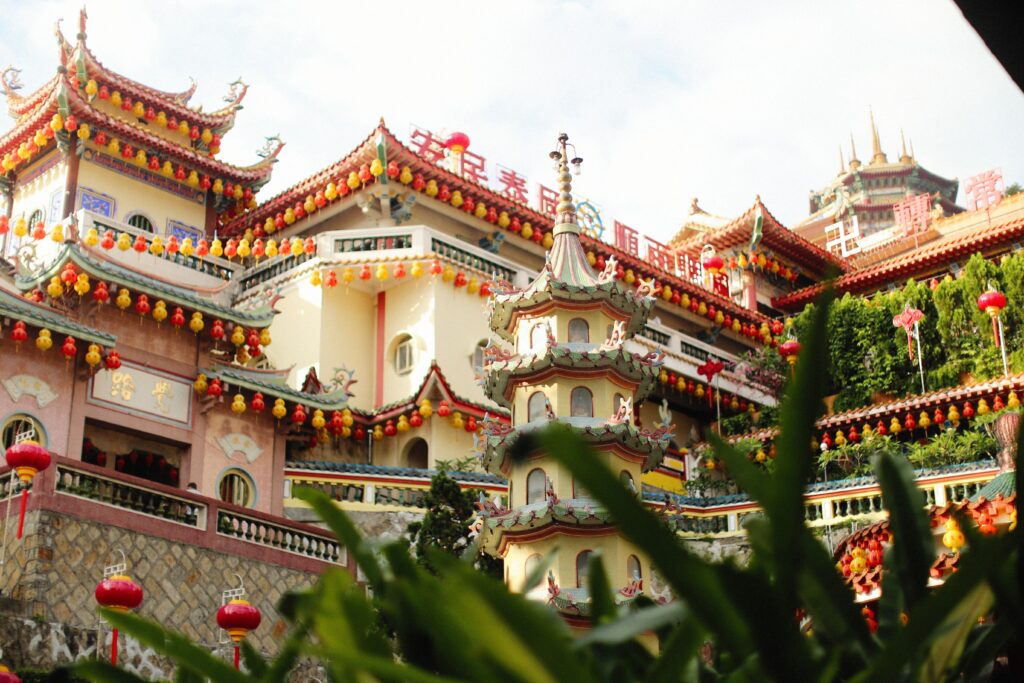
Perched dramatically on a hillside in Air Itam, Kek Lok Si Temple Penang is the kind of place that stops you in your tracks the moment it comes into view. Whether you’re catching your first glimpse of its towering pagoda from the road below or standing at the summit staring up at a 36-metre bronze goddess emerging from the mist, there’s something genuinely awe-inspiring about this place. It’s one of those rare destinations that delivers on the hype — and then some. If you’re planning a trip to Penang and wondering whether Kek Lok Si deserves a spot on your itinerary, let me save you the deliberation: absolutely yes.
What Is Kek Lok Si Temple Penang?
Kek Lok Si Temple is the largest Buddhist temple in Malaysia and one of the most significant pilgrimage sites in all of Southeast Asia. Founded in 1890 by a Buddhist monk from Fujian province in China, the temple complex has grown over more than a century into a sprawling hillside sanctuary that draws pilgrims and travellers from around the world.
What makes Kek Lok Si so visually distinctive is its multicultural architectural heritage. Rather than adhering to a single style, the temple reflects Penang’s beautifully layered history — you’ll find Chinese, Thai, and Burmese influences woven throughout the complex. The most iconic example of this is the Pagoda of Ten Thousand Buddhas, which features a Chinese-style base, a Thai middle section, and a Burmese crown sitting on top. It’s a fitting metaphor for Penang itself: a place where cultures have been layering on top of one another for centuries.
If you’ve already explored the streets of Georgetown and Batu Ferringhi, you’ll already have a feel for this multicultural spirit. Kek Lok Si takes that same energy and gives it a spiritual dimension that’s genuinely hard to shake.
Key Attractions Inside Kek Lok Si Temple Penang
Set aside at least two hours for a proper visit, though three hours gives you room to breathe, wander, and soak it all in without feeling rushed. Here’s what you’ll want to make sure you see:
The Giant Kuan Yin Statue
This is the crown jewel of the temple complex — a 120-foot (approximately 36 metre) bronze statue of Kuan Yin, the Goddess of Mercy, standing under an ornate open-air pavilion at the temple’s highest point. Reaching it requires taking the inclined lift system (more on that shortly), but the journey is absolutely worth it. The statue is breathtaking up close, and the panoramic views of Penang stretching out below you are the kind of thing you’ll be describing to people for years.
The Pagoda of Ten Thousand Buddhas
This seven-storey pagoda is the most photographed structure in the complex, and for good reason. Its three-tiered architectural style — Chinese at the base, Thai in the middle, Burmese at the crown — is genuinely unique and beautifully executed. Inside, the walls are lined with thousands of small Buddha statues, giving the pagoda its name. There’s a small additional fee of RM2 to climb it, and it’s well worth paying.
The Turtle Pond (Pond of Longevity)
Near the temple’s lower levels, you’ll find a pond home to over a hundred tortoises, which hold deep symbolic meaning in Buddhist culture — representing longevity and good fortune. You can pick up a small bag of tortoise food from nearby stalls for a few ringgits, and the kids (and honestly, the adults too) absolutely love it.
The Main Prayer Halls
The prayer halls are the spiritual heart of the temple. They’re beautifully decorated with incense, lanterns, and elaborate statues, with intricately carved and painted ceilings that reward a slow, attentive look upward. Remember to remove your shoes before entering — it’s both a sign of respect and a practical necessity, since the floors can be quite ornate.
The Lantern-Lined Walkways
As you wind your way up through the complex, you’ll pass through covered walkways strung with colourful donor-sponsored lanterns. These make for some genuinely beautiful photographs and give the temple its festive, welcoming atmosphere even on regular days. During Chinese New Year, these lanterns multiply dramatically — more on that below.
Getting to Kek Lok Si Temple
The temple is located in Air Itam, which sits comfortably between Georgetown and Penang Hill, making it very easy to combine with other sights in the area.
| From | Transport | Time | Approximate Cost |
|---|---|---|---|
| Georgetown | Grab | 15–20 minutes | RM20–40 |
| Georgetown | Bus (201, 204, or 502) | ~50 minutes | RM2 |
| Batu Ferringhi | Grab | ~45 minutes | RM30–50 |
| Penang Hill | Car/Grab | ~5 minutes | RM10–15 |
For most visitors, catching a Grab from Georgetown is the most convenient option — it’s affordable, quick, and drops you right at the entrance. If you’re travelling on a tighter budget, the bus is a perfectly comfortable alternative, though it does take considerably longer.
Since Kek Lok Si is only five minutes from Penang Hill, it makes a natural pairing for a half-day or full-day itinerary combining culture and nature in one go.
Opening Hours and Admission Fees
One of the most pleasant surprises about Kek Lok Si is that general entry to the temple complex is completely free. You’ll only pay for a couple of optional extras:
- General Entrance: Free
- Inclined Lift (Cable Car) — Adult: RM16 return / RM8 one-way
- Inclined Lift (Cable Car) — Child: RM8 return / RM4 one-way
- Pagoda Climb: RM2 additional fee
- Car Park: RM3–5
Opening hours: 8:30 AM – 5:30 PM (exit by 6:00 PM)
A quick note on the inclined lift: it operates in two stages — an initial cable car, followed by a short golf-cart style ride, then a second cable car to reach the top near the Kuan Yin statue. It’s efficient and quite fun. The lift runs on cash only, so make sure you’ve got small bills handy before you arrive.
The climb to the summit is steep and can be genuinely challenging in Penang’s humid heat. Many visitors recommend taking the lift up and walking back down at your own pace — this way you conserve energy, don’t miss any of the views, and still get to explore the lower levels of the complex on foot.
Practical Tips for Visiting Kek Lok Si Temple Penang
A little preparation goes a long way at Kek Lok Si. Here’s what I’d tell a friend heading there for the first time:
Timing
– Arrive early — ideally by 9:00 AM. The morning light is beautiful, the air is cooler, and you’ll beat the tour groups that tend to arrive mid-morning.
– Avoid visiting on public holidays if you’re sensitive to crowds, particularly during Chinese New Year (though that’s also the best time to see the temple at its most spectacular — see below).
What to Wear
– Modest clothing is expected and respectful — cover your shoulders and knees. Many prayer halls have sarongs available if needed.
– Comfortable, easy-to-remove shoes are essential. You’ll be slipping them off repeatedly for the prayer halls, and there are plenty of stairs involved.
What to Bring
– Cash in small denominations — most areas are cash only, including the inclined lift and food stalls.
– A refillable water bottle. Penang is hot and humid year-round.
– A camera or fully charged phone — Kek Lok Si is extraordinarily photogenic.
How Long to Allow
– 1–2 hours covers the main highlights comfortably.
– 2–3 hours lets you explore at a relaxed pace, spend time in the prayer halls, and take the lift to the summit.
After Your Visit: Where to Eat Nearby
Just outside the temple precinct, you’ll find the Beng Chin Garden food court, which is a solid spot to rest your feet and refuel after a morning of exploring. It serves up authentic Penang dishes at very affordable prices — Char Kway Teow, Hakka Mee, and plenty of other local favourites. It’s also a great spot to wait comfortably for your Grab rather than standing on the roadside in the heat.
Penang’s food scene is one of its greatest gifts to the world, and even a casual hawker lunch near Kek Lok Si gives you a taste of why this island has such a devoted following among food lovers. For a broader guide to eating and exploring around the island, check out our full guide to things to do in Penang.
Chinese New Year at Kek Lok Si: Worth the Crowds
If you happen to be visiting Penang during Chinese New Year, make every effort to visit Kek Lok Si in the evening. The temple transforms into something almost otherworldly — tens of thousands of lanterns are lit up across the entire complex, creating a golden glow that’s visible across much of Penang. It’s genuinely one of the most spectacular annual events in Malaysia and absolutely worth the larger crowds. Plan to arrive early and stay for sunset.
Is Kek Lok Si Temple Penang Worth Visiting?
Without hesitation: yes. Whether you’re a first-time visitor to Malaysia or a seasoned traveller returning to Penang for another look, Kek Lok Si offers something that doesn’t fade with repeat visits. The scale of the complex, the fusion of architectural styles, the spiritual atmosphere, and those sweeping hilltop views all combine to make it one of the most memorable experiences the island has to offer.
Given that general entry is free and the whole experience can cost less than RM30 per person, it also represents outstanding value by any measure.
Penang is one of the jewels of Malaysian travel, and Kek Lok Si sits at its very heart. Whether you pair it with a morning on Penang Hill, an afternoon wandering Georgetown’s heritage streets, or a longer road trip that takes in nearby destinations like Ipoh, this temple is the kind of place that anchors a trip and gives it meaning.
Planning your Penang adventure? Head over to our complete guide on Georgetown and Batu Ferringhi for everything you need to know about where to stay, what to eat, and how to make the most of your time on the island. And if you’re mapping out a broader Malaysian itinerary, our Malaysia destination hub is the perfect place to start.


